What risks are associated with lithium batteries?
Lithium batteries deliver impressive performance:
- High energy density for PLEVs, electric and hybrid cars.
- Low weight, ideal for drones and portable electronics.
- Long service life for battery-energy-storage systems (BESS).
They have become indispensable in everyday life and are seeing explosive growth across every sector.
Yet the fire risk is real — annual losses in France alone exceed €80 million, and several fatalities have been recorded.
Because this risk is hard to control, lithium batteries are classified as dangerous goods under the ADR (European Agreement concerning the International Carriage of Dangerous Goods by Road).
Why are lithium batteries dangerous?
They are highly sensitive to several failure modes:
- Electrical failure caused by corrosion, short-circuit, a manufacturing defect, or physical shock (drop, impact).
- Internal failure linked to charging issues or ageing (swelling, dendrite growth, etc.).
- Thermal runaway when exposed to high temperatures.
A lithium battery is a pack of many interconnected cells. The failure of a single cell can trigger a runaway chain reaction: flammable gas, extreme heat, and a domino effect that destroys neighbouring cells.
Incidents escalate quickly. Even when batteries are not the ignition source, their involvement worsens a fire because the electrolyte itself is flammable. Property losses depend on the number of batteries, their state of charge (SoC) and state of health (SoH). If they fail, they also release flammable gases and highly toxic fumes.
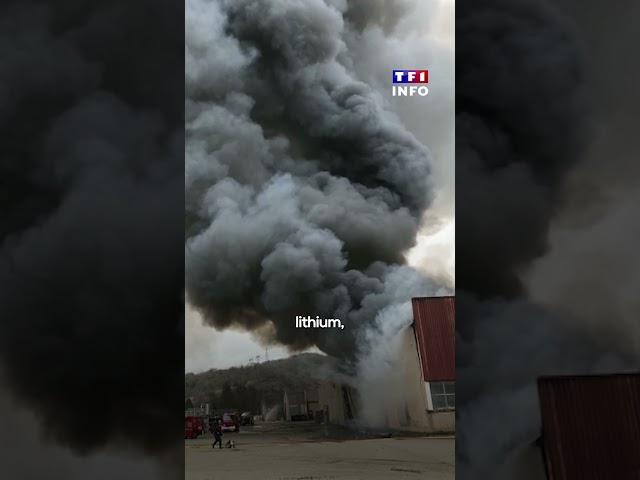
Storage and recycling catch fire
Recycling operations are particularly vulnerable to fires involving lithium batteries. Many companies have small problems, until the major risk, when everything is destroyed.
What happened in Aveyron, from transport to the treatment centre:
- December 2022 – incident during transport to Snam.
- February 2024 – a warehouse storing 900 t of lithium batteries caught fire, with environmental and health impacts. Wind-direction modelling was essential to assess smoke toxicity for local residents.
Air transport
In-flight incidents mainly involve e-cigarettes and passengers’ power banks.
Lithium-battery technology and risks
The French institute INRS has produced webinars to help professionals understand these risks.

> Watch the full INRS technical-day playlist on lithium batteries
How do you choose solutions for transporting, charging, and storing lithium batteries?
Every company is unique. Selecting the right solution requires a thorough analysis of safety, regulatory, environmental, and practical criteria — all depending on the condition of the batteries.
Sample solutions
| Type | Description | Typical activities |
|---|---|---|
| Detection | Gas analysis, temperature monitoring … | Stationary installations |
| Outdoor storage | Storage containers and cabins | Industrial sites, logistics hubs |
| Charging multiple batteries | Safety storage cabinets | Workshops, rental services |
| Storage, transport, recycling | Transport boxes, quarantine boxes for damaged or spent batteries | After-sales service, collection points |
| Electrical cabinets / IT racks | Connected detection and automatic-extinguishing system, CNPP-certified | Industrial sites, offices |
| Preventive or during a fire | Fire blankets | Automotive sector, industrial sites |
Example: sensors installed on a battery-energy-storage system (BESS)
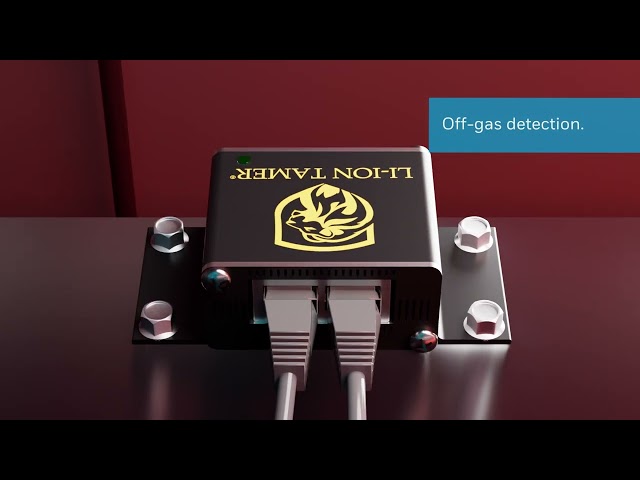
Other measures include bringing buildings and electrical installations up to standard (see APSAD R15 fire-separation guide).
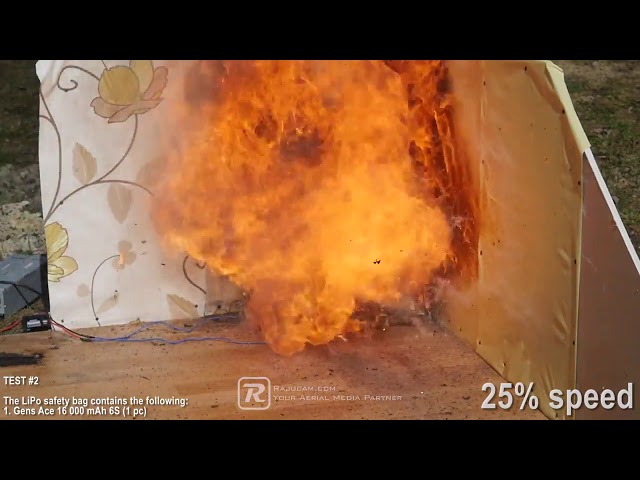
Are LiPo safety bags really effective?
Model-making enthusiasts often rely on so-called fireproof pouches, but many do not withstand the toughest conditions.
Do I need a special lithium fire extinguisher?
Could you really cool damaged cells effectively?
- For battery fires above 100 Wh, conventional extinguishers are ineffective because the agent cannot reach the heart of the battery.
- Most people cannot intervene safely amid dense, highly toxic smoke that may contain high concentrations of hydrogen fluoride (HF) and acids. Adequate PPE is essential in enclosed or semi-enclosed buildings.
In most situations, we recommend an AB-class approved extinguisher (water with additive) to act around the battery and limit fire spread.
Impacts on your company’s organisation
Site selection (regulatory compliance …), layout, supervision, and charge management must be integrated into an overall safety strategy (emergency-response plans …). Typical actions include:
- Appointing an internal safety officer (and a backup)
- Securing batteries (emergency intervention or rapid evacuation protocol)
- Managing logistics flows (documented processes)
- Staff training (onboarding, certifications), and end-user protection (appropriate equipment)
More information on lithium batteries
Explore additional resources on lithium-battery safety and use, in French:
See all our articles in the Publications & resources section.